Đà Nẵng, on a late October day.
It is the monsoon season at the moment. Rain has been a constant for the past few days, luring all the people in this small coastal city into a kind of half-asleep, half-awake type of trance. But it is sunny now, the gentle rays of sunlight fall slowly through the air like snowflakes, as if they were still weighed down by the hours of rain before it.
He glanced at the clock on the wall. It’s 4 p.m., and it’s so quiet in here.
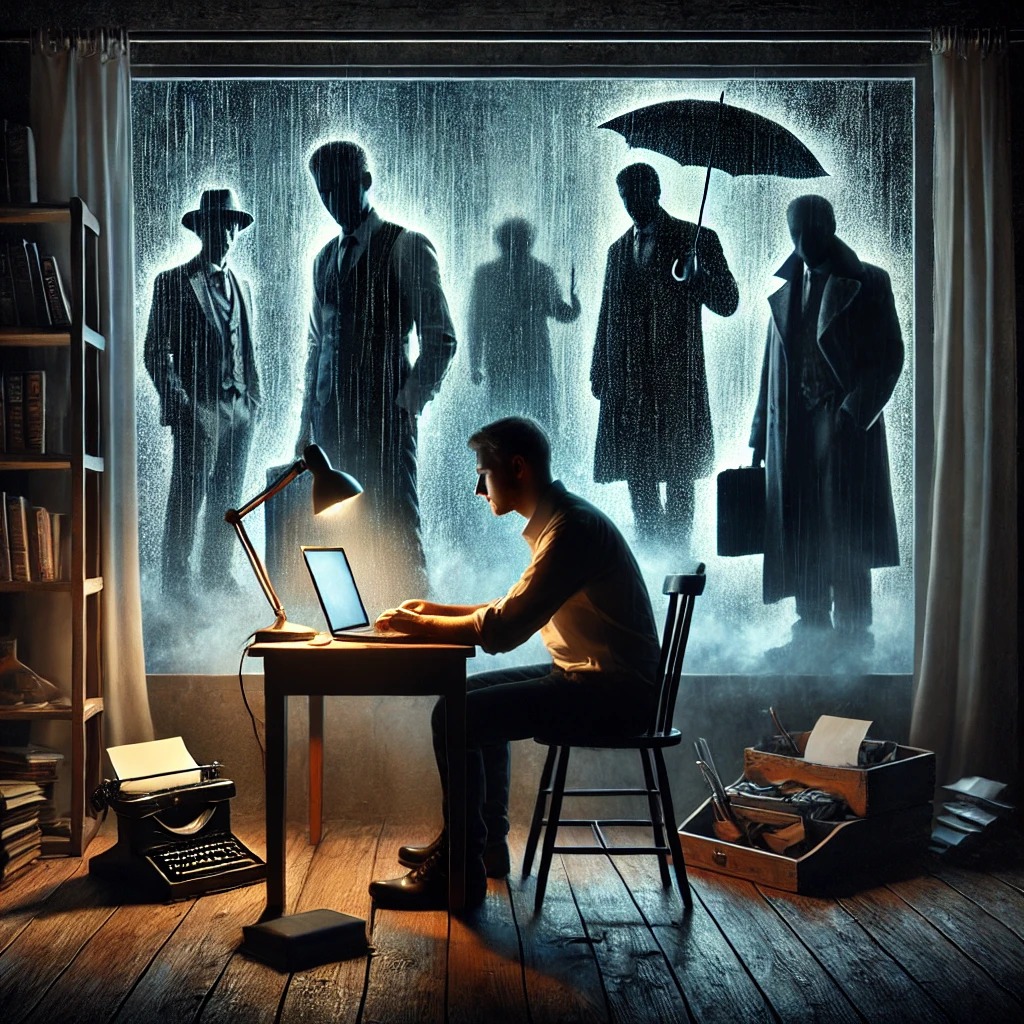
The late afternoon sun filtered through the blinds, casting long shadows across the cluttered apartment. A soft, steady rain began again. Raindrops started to tap against the windows, faintly at first, growing stronger as the minutes ticked by.
The room darkened. The only light came from a dim desk lamp and the glow of the laptop in front of him. The room was quiet, save for the occasional creak of the chair beneath him. His fingers hovered over the keyboard, but the screen showed no new words. Instead, it displayed a Facebook page.
Her Facebook page.
He stared at her profile photo: a radiant smile framed by a wedding dress. The man beside her—her husband—looked effortlessly happy.
He clicked on one of her most recent pictures. It was her, her husband, and a little girl who was unmistakably their daughter. They were on a beach, their feet buried in sand, waves rolling in gently behind them.
He felt his throat tightened, and he clicked through more pictures. There she was again, surrounded by friends and family, looking every bit the person he remembered but had lost.
He wanted to write something, so he opened a new document on his screen. But he didn’t know what to put on the blank page. Words escaped him, and his focus drifted as quickly as they gathered. He leaned back in his chair, rubbing his tired eyes.
Something soft and fuzzy rubbed against his leg. Must have been one of his cats. He absentmindedly reached down to pet it, but his focus was too distracted; his mind was elsewhere.
The rain outside had intensified, threatening to become a real torrent that rattled the windows and filled the room with a rhythmic roar.
His vision blurred. His breathing slowed. The cursor blinked on the screen, forgotten.
He hadn’t meant to fall asleep, but he did.
When he opened his eyes, the room was different.
The rain had stopped—or so it seemed. Everything around him is utterly, unnaturally dead quiet. The only sound now was the creak of a door, slowly opening behind him.
His heart raced. He turned in his chair. Standing in the doorway was a man. A man who looked strangely familiar.
The man wore a sharp suit, tailored to perfection, like something he himself had once dreamed of owning. His hair was neat, his posture confident, but his eyes… they were hollow.
“Hello,” the man said with a smirk. “Recognize me?”
He tried to speak but found no words. He knew this man. Knew him intimately.
“I am one of the Ghosts of What-could-have-been,” the man continued, stepping into the room. “You know, the versions of you that actually followed through with your dreams. The one who didn’t give up.”
His pulse quickened. He wanted to argue, to deny this figure’s existence, but before he could respond, more figures appeared. One by one, they emerged from the shadows—each one dressed differently, each one resembling a life he had imagined for himself, but never lived.
One of them was an artist, paint smudging his hands, eyes gleaming with creative energy. Another looked like a traveler, worn leather boots and a backpack slung over his shoulder. Another was a writer, with papers spilling out of his arms, stories unwritten. They all circled him, their presence both accusatory and pitying.
“You could have been any of us,” one of the Ghosts said, stepping closer. “But you didn’t.”
“You chose nothing,” another added, shaking his head.
The room darkened further. The air grew heavy with the weight of his unrealized potential, of missed opportunities.
He felt a deep shame coil in his stomach, suffocating him. “But—” he started, but the Ghosts spoke over him.
“You had the chances, didn’t you?” one of them sneered. “You could have finished that novel, you could have gone to Paris, you could have…”
“Don’t!” the Narrator shouted, clenching his fists. “You know. You know I had reasons. I couldn’t…”
“Yes,” one Ghost said softly, stepping forward. “You couldn’t overcome your fear. And that fear, look where it got you.”
The Ghost who had spoken last, the one who seemed to carry the heaviest weight of disappointment, tilted his head toward the Narrator, eyes narrowing as if considering something. He raised a hand, and the room began to warp. The walls stretched and shifted, and suddenly the apartment faded, replaced by a new scene—one so vivid and familiar that the Narrator felt as though he had been thrust into an alternate timeline.
It was his younger self, standing at a podium, dressed in the same tailored suit that the first Ghost had worn. The audience was packed with people, their faces rapt with attention. They were all there for him. In this vision, he was delivering a speech—eloquent, commanding, filled with purpose. His voice carried the weight of someone who had made something of himself. The applause thundered, and he stood there, basking in the glow of admiration.
“You could have been a leader,” the first Ghost said, voice dripping with disdain. “Remember when you considered politics? You had the intelligence. The charisma. The ambition.” He stepped closer, his breath cold against the Narrator’s neck. “But no. You convinced yourself you weren’t good enough. You talked yourself out of it, didn’t you?”
The vision flickered, and the scene shifted again.
Now, the Narrator found himself standing in an art gallery, walls adorned with stunning paintings. He recognized the brushstrokes instantly. They were his. Or rather, they could have been. People milled around the gallery, sipping wine, discussing his work in hushed tones of awe and reverence. His name was on their lips, his art celebrated. He could almost hear the snippets of praise:
“A visionary.”
“One of the greatest of his generation.”
“You could have been this,” the artist Ghost said, gesturing around the gallery with a paint-smudged hand. “You had the talent. The passion.” His voice darkened. “But instead, you let your self-doubt eat away at you. You stopped painting altogether. You told yourself it wasn’t practical. That it wasn’t worth the risk.”
His mouth went dry. He couldn’t tear his eyes away from the vibrant colors, the way his imagined success glistened in the eyes of the onlookers. It stung. He opened his mouth to protest, to explain himself, but the scene shifted again before he could.
Now he stood at the top of a mountain, gazing down at a sprawling city below. His heart raced, not with fear, but with the exhilaration of accomplishment. His legs were tired, muscles aching from the climb, but the view—oh, the view—was breathtaking. The horizon stretched far beyond what he thought possible, a testament to all the miles he had trekked. He felt alive, more alive than he had ever been.
A voice whispered from behind him, “Remember when you dreamed of travel? Of adventure?” The Ghost who looked like a weathered traveler stepped forward. His boots were worn, his face bronzed from the sun. “You had a whole world waiting for you. And what did you do? You stayed put. You stayed safe. Because deep down, you were too afraid to leave. Too afraid to get lost. Too afraid to fail.”
The mountain scene dissolved into darkness, replaced by another. He was now sitting at a desk in a bright, airy room. Stacks of paper surrounded him, each filled with words, his words. The room was warm, cozy, but what filled it more than anything else was a sense of fulfillment. He was writing, and it was good—no, it was brilliant. The kind of writing that made people think, that touched their souls, that inspired change. A stack of published books, with his name embossed on the cover, sat beside him.
“This,” a new Ghost said, the one with papers spilling out of his arms. “This could have been your reality.” His voice was filled with pity as he pointed to the pile of manuscripts. “You had the stories inside you. You have them still. But you always found an excuse, didn’t you? Too tired. Too busy. Not good enough.” He threw the papers into the air, where they scattered like leaves. “And now, you’ve let them rot in the corners of your mind.”
Each Ghost, each version of himself, took turns showing him life after life—an accomplished author, a world traveler, a celebrated artist, a public figure. The visions were intoxicating in their perfection, vivid enough that for a moment, he believed they could be real. He wanted to reach out, to grasp these alternate lives, to somehow claim them as his own. But every time he reached for them, they faded just as quickly as they appeared, leaving him standing alone in the dark.
He could feel the weight of their eyes on him, feel their judgment bearing down on him.
“And now,” the first Ghost said, stepping closer, his voice as cold as the grave, “what do you have? You’ve wasted it all. Wasted us.”
The others nodded in agreement, their faces hardening with disappointment, but their mocking smiles stayed in place.
“You had every chance,” one Ghost sneered. “Every opportunity. And you squandered all of them.”
He shook his head, trying to defend himself, to explain the choices he had made. “You don’t understand,” he stammered, his voice shaking. “It wasn’t that simple. Life—life got in the way. I didn’t have the time, the resources…”
“Excuses,” one of the Ghosts spat. “All of it is just excuses.”
The air in the room grew thick, suffocating. The Ghosts’ faces loomed closer, surrounding him, their presence overwhelming. He couldn’t move, couldn’t think. Their accusations, their mockery, echoed in his mind, louder and louder, until it became unbearable. The Ghosts closed in, their voices rising in a cruel crescendo, overlapping, suffocating.
“You could have been so much more…”
“You could have lived so many lives…”
“But now, you’re nothing…”
The room seemed to spin as the Ghosts circled him, voices blending into a cacophony of accusations. They overlapped, louder and louder, until he wanted to scream.
But then, the door slammed open, and silence fell once again.
He looked up, gasping for air, as the Ghosts suddenly vanished. The air, once heavy with their accusations, now felt oddly still.
But he wasn’t alone.
Another group of figures had appeared, standing silently in the dim light. These men were different—grimmer, more grounded. They didn’t shimmer with the glow of possibility or unfulfilled dreams. Instead, they were dull, ordinary, like shadows that had always lingered in the background, unnoticed. They looked like him, but each was worn down in a way that reflected different parts of his current life.
The first figure, hunched over, wore a simple button-down shirt and jeans. His eyes were bloodshot, and there was a faint odor of stale coffee clinging to him. A notebook was tucked under one arm, and a bag filled with textbooks hung heavily from his shoulder. His face was drawn, tired from too many hours in coffee shops, bouncing between tutoring sessions with students who barely cared. This was the Echo of the Teacher, the version of him who sat for hours, explaining grammar rules to students who struggled to write coherent sentences, all while internally ranting about the flaws of his country’s education system. His voice was sharp, but beneath it lay the bitterness of someone whose high standards were rarely met. He had passion, yes, but no audience that truly understood it.
Next to him stood another figure—this one in casual clothes, the kind that felt like a uniform of convenience rather than choice. His hair was slightly tousled, the sort of messiness that came from not really caring how you looked in front of a camera. He held a phone in his hand, constantly refreshing a screen, the glow casting a faint, unhealthy light on his face. His eyes darted nervously from side to side, searching for likes, shares, or some form of validation. This was the Echo of the Content Creator, who craved attention from strangers, yet never felt good enough to believe he deserved it. He shared tutorials, bits of knowledge, anything he thought might win him approval. But the exhaustion in his expression revealed a deeper truth—no amount of external validation could ever fill the void within him. His content was a shout into the void, seeking approval from a world that barely glanced his way.
Further back stood a figure who looked somewhat disheveled, his shirt untucked, dark circles under his eyes. His face, though weary, was kind, his posture slightly slumped as if carrying the weight of other people’s problems. This was the Echo of the Friend, the man who was always available, always willing to listen to others. His eyes were tired but attentive, constantly scanning the room for someone who might need his help. His phone buzzed quietly in his pocket, a reminder that there was always someone asking for advice, for a favor. He smiled—a sad, resigned smile—because he knew he’d always show up for them. But his face carried the silent burden of someone who never asked for help in return, who believed that his own problems weren’t worthy of anyone’s time. His hands twitched, as if longing to reach out and fix something, even as the cracks in his own life deepened. He was the man with a savior complex, always extending his energy to lift others but never willing to save himself.
The final figure, barely distinguishable from the shadows, stood a little apart from the rest. His clothes were nondescript, his expression a careful mask of neutrality. He looked like someone who blended into any crowd, someone you wouldn’t remember after walking past. But his eyes were deeply observant, flicking between the others with quiet intensity. This was the Echo of the Silent Observer, the version of himself that spent more time analyzing his own inadequacies than confronting them. He held himself apart, never quite fitting into the roles others expected of him. He was always on the edge of participating, always watching from the sidelines, convincing himself that he wasn’t good enough to take center stage. His thoughts swirled in endless circles of self-doubt and self-criticism, but he kept those thoughts to himself. After all, who would listen?
Each Echo was a reflection of a different role he played in his ordinary, fragmented life. They didn’t scold him like the Ghosts had, but their presence spoke of resignation, of the quiet defeat that came from being pulled in too many directions, yet never truly moving forward. He saw in them the reality of his existence—the teacher with too much passion and not enough appreciation, the content creator chasing hollow validation, the friend who gave everything but received nothing in return, the man who observed life but never fully lived it.
As they stood there, not accusing him, but embodying the quiet, unspectacular truth of his life, he felt an ache deep within him. These weren’t grand failures. They were worse. They were the result of settling, of choosing safety over risk, of existing but never truly thriving. These were the versions of himself he had become in the eyes of others—present, but forgettable. Helpful, but insignificant. Ambitious, but unfulfilled.
“You see now, don’t you?” the Echo of the Teacher asked, his voice weary but calm. “We are the Echoes of What-is,” he said. “This is what you are. This is what you’ve made of yourself,” the Echo crossed his arms.
The others nodded silently, their eyes locked on him. No anger, no disappointment. Just truth.
And in that truth, the Narrator felt himself begin to unravel.
The Echoes of What-is were familiar, painfully so. These were the versions of himself that existed in the real world, the ones who moved through his everyday life unnoticed, insignificant. These were the men his coworkers saw, his friends talked about, the man who passed through life without making a mark.
“We are how they see you,” one of the Echoes said with a grim smile. “You’re not special. You’re not interesting.”
“You think people think about you? They don’t,” another Echo chimed in. “You’re just… background noise.”
His stomach dropped. He felt like a child again, desperate to prove himself, to be seen, to be worthy of attention, just as he had been in the past, always striving to earn his parents’ approval, especially from his father—never quite succeeding, never quite good enough. No matter how hard he tried, the accolades or achievements were never enough to break through the wall of silence, to pull more than a brief, distracted glance from his dad, whose approval he had sought for so long, it had shaped his every ambition.
But the Echoes were merciless. They showed him conversations—his friends, his colleagues, even his family—talking about him behind his back. The voices were soft at first, like whispers, but they grew sharper, cutting through the air with a brutal honesty he hadn’t expected.
“He’s just… there,” one friend said, the words dripping with indifference.
“Yeah, he’s nice,” a coworker chimed in, “but what’s he really doing with his life? Every year, it’s the same. No big changes. No growth. Just… stuck.”
He winced, but the voices didn’t stop. The next one was from a family member—an uncle, perhaps—who chuckled as he spoke, but the tone was biting. “He’s got so much potential, but potential doesn’t mean anything if you don’t do something with it.”
Then came the Messenger message.
It flashed in front of him, bright and unavoidable, like an accusation. He recognized the sender—an old friend, one he had always admired for their brutal honesty. The text read:
“I just feel like you’re not really living. You have so much potential but don’t bother to do much. I don’t get it. You’re wasting yourself.”
The words hung in the air, each one more painful than the last. He had seen that message before, read it, and brushed it off at the time, pretending it didn’t sting as much as it did. But now, here it was again, burning with a new intensity, echoing in his mind. He wanted to reach out and erase it, to make it disappear, but it stayed, taunting him.
“You’re wasting yourself,” the Echo of the Content Creator repeated softly, almost like a lament.
The others nodded, their expressions grim but resigned.
“Everyone sees it,” another Echo added, stepping forward. “They don’t say it to your face, but they think it. They’re waiting for you to do something, but you never do.”
He shook his head, trying to block out their voices. “Stop,” he muttered. “That’s not… it’s not like that…”
But the Echoes continued, their voices blending with the rain outside. They whispered his fears, his doubts, until the air was thick with them.
Then came the thunder. It cracked through the air like a whip, shaking the walls of the apartment. The Echoes froze for a moment, then vanished into thin air.
From the darkness, Specters emerged—dark, shadowy figures cloaked in mist. They were silent at first, but their presence filled the room with a deep, pulsing dread.
He’s breath hitched. He didn’t want to face them. He knew what they represented.
One of the Specters glided toward him, its voice barely a whisper. “We are the Specters of What-might-be.”
His chest tightened. His future—this was his future.
The Specters didn’t speak in accusations. They didn’t need to. Their presence was colder, more distant, as if they carried with them the inevitability of time itself.
One by one, they moved forward, lifting the veil between present and future, showing him not just what might be, but what awaited him if nothing changed.
The first vision flickered to life before his eyes: his parents’ funerals. He stood at the back of a crowded room, dressed in black, his face hollow with grief. The scene was muted, the mourners blurred at the edges, but his parents were unmistakable, lying side by side in simple caskets. His father’s face, once stern and unyielding, was now peaceful, the lines of disappointment smoothed away by death. His mother, gentle even in her final moments, seemed to rest without worry.
In the vision, he approached the caskets, his hands trembling. The faces of his parents, peaceful in death, stirred something deep inside him, a pain so overwhelming he could barely breathe. His father’s eyes—so often cold, distant, always expecting more of him—were now closed forever, leaving behind an unfinished conversation, the approval he had sought all his life now lost in the silence of the grave.
He realized, in that moment, that he hadn’t been there enough for them in life. Not when it mattered. And now, in death, they were beyond his reach, beyond any reconciliation.
The scene dissolved, morphing into the familiar walls of his apartment. Except now, the years had passed, and the room was older, worn down by time and neglect. The clutter had grown—piles of old notebooks, unpaid bills, and empty coffee mugs littered the space, as if time had stopped and left him frozen in a state of perpetual disarray. The wallpaper was peeling, and the furniture looked even more frayed than before, sagging under the weight of years of solitude. Dust coated everything, but there was no energy left in him to clean it up.
He was there too, but older—gray hair streaking through his thinning strands, deep lines etched into his face. His eyes were hollow, lifeless, as he moved about the apartment like a ghost himself, repeating the same routines day after day. He ate alone, read alone, sat alone. There was no one to talk to. No one to visit. His phone lay discarded on the table, untouched for months. The notifications, once buzzing with messages and calls, had long since stopped. The world had moved on without him, and he had let it.
Another flicker, and he was in a darkened hospital room, sterile and cold. The only sound was the steady beep of a heart monitor. He was lying in the bed, frail and weak, the weight of years pressing down on his chest. A nurse entered the room, checking his vitals mechanically, without emotion, then left him in the silence.
There was no one else in the room. No visitors, no loved ones by his side. His phone lay untouched on the bedside table, unlit and silent. No messages. No calls. He had faded from people’s lives as easily as ink fades from an old letter. The world had moved on without him, and he had no one left to care.
As the final scene unfolded, the apartment reappeared. This time, it was darker, more desolate. The future him sat in a recliner by the window, gazing out at the rain with blank eyes. The air felt heavy with the weight of routine, of a life lived without passion, without risk, without connection. He was older now, but no wiser, trapped in the same patterns that had haunted him for decades. And worse, he wasn’t waiting for anything. There was no future to look forward to, no excitement on the horizon. Just a long, slow fade into obscurity.
And then, the Specters showed him the end.
There was no grand finale, no tearful goodbye. It was quiet, like slipping beneath the surface of still water. He saw himself, alone, sitting at that same desk, his head bowed over the keyboard. The screen was blank, his hands limp. There was no one to find him, not for days. The world outside continued, indifferent to his absence.
The vision faded, but the chill lingered in the air. The Specters stood silently before him, their presence a constant reminder of what waited for him if he continued down this path. Their hollow whispers brushing against his ears like a bitter wind. “You think this is all there is, don’t you?” one hissed, its voice laced with cruelty. “You think you’re stuck. That nothing will change.”
He backed away, his heart hammering against his chest. “No,” he muttered, his voice cracking with desperation. “I can change. I will change.”
“You say you can change,” one of the Specters whispers, “but we know the truth. You’ve said it a thousand times before. And every time, you come right back here—right back to this room, this life. You’ll never leave.”
Before he could protest, the Ghosts of What-could-have-been materialized, stepping out from the shadow, their faces twisted with hatred. “You could have been more,” one spat, advancing toward him with eyes blazing. “You had the talent, the drive. You could have lived a hundred different lives—successful, fulfilled. But what did you do? You wasted it all!”
“You let fear stop you,” another Ghost snarled. “Every opportunity, every dream—you destroyed them. And now look at you.”
The Echoes of What-is were next, appearing alongside the others, their tired faces filled with disdain. “This is what you are now,” one of them murmured, his voice sharp but calm, like a blade slicing through the silence. “A man with no ambition, living the same day over and over again. You pretend you’re trying, but you’re not. You’re just existing.”
“And no one sees you,” an Echo added, stepping forward, his gaze piercing. “You think you’re important? You’re invisible. No one cares about you. They won’t even notice when you’re gone.”
The voices overlapped, blending into a furious storm of self-loathing. The Ghosts, Echoes, and Specters all ganged up on him, forming a suffocating circle, their voices rising in a brutal, merciless crescendo.
“You’re nothing.”
“You failed.”
“You’re wasting your life.”
“No one will remember you.”
The words tore through him, sharp and venomous. He couldn’t escape them. His breath quickened, his body trembling under the weight of their accusations. The room seemed to spin, shrinking around him until there was no escape. The walls pressed in, suffocating him with the truth he had tried to avoid, the truth that had always lurked in the darkest corners of his mind: He hated himself. He hated what he had become, who he is, and what awaits him in the future.
He was spiraling, falling deeper and deeper into the abyss with each passing second. His own voice—his own face—was everywhere, accusing, mocking, condemning.
“Enough!” he screamed, his voice raw, desperate, but it did nothing to stop the storm. Their voices rose higher, louder, until it felt like the room itself would collapse under the weight of their hatred.
“Enough!” he screamed again, his body shaking violently. “I can’t—!”
And then—CRACK.
A deafening clap of thunder tore through the storm, shaking the very foundations of the room. The voices fell silent. The darkness swallowed everything in an instant.
He awoke with a jolt, gasping for air. His heart still pounded, his skin clammy with cold sweat. He blinked, disoriented, as the world around him came into focus.
The apartment. He was still in his apartment, sitting in the same chair in front of his computer. The faint glow of the screen illuminated the room, casting eerie shadows against the walls. Outside, the storm raged on, the sound of rain and distant thunder filling the silence left by his nightmare.
It had all been just a dream.
His breathing slowed, but the weight in his chest didn’t ease. The images of the Ghosts, Echoes, and Specters clung to him like a thick fog, their voices still echoing faintly in the back of his mind.
He rubbed his face with shaking hands, trying to ground himself, to remind himself that he was awake. His fingers brushed against something soft, and he looked down. His cats stood around him, all four of them. Their fur brushing his legs, their eyes wide with concern. They stared up at him, their silent presence both comforting and unsettling, as if they could sense the storm that had been raging inside him.
They didn’t speak, but their gaze said everything: they cared. They worried.
The rain outside had become a torrent, slamming against the windows, and all the doors were open, curtains whipping in the wind.
He sat there for a moment, catching his breath, his mind racing.
Then, slowly, he closed the laptop. The rain continued to fall, drowning out everything else.
The End

 Tập Viết
Leave a comment