When life’s challenges seem overwhelming, I often hear the familiar advice: “use your head,” “listen to your heart,” or “trust your gut.”
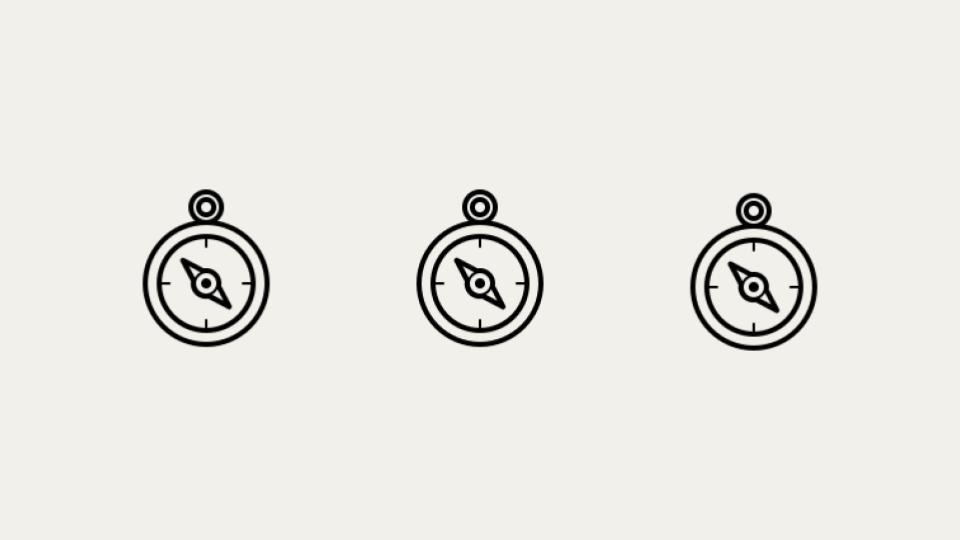
To me, these pieces of wisdom symbolize the trio of reason, emotions, and intuition—our personal compass needles guiding us through the complexities of life.
Yet, in my experience, these needles rarely align, leading me to navigate through three distinct paths with every problem I face.
This is just one man’s perspective, not a universal truth, but it has shaped the way I approach life’s dilemmas. Which path will you choose?
The compass of Reason
Reason is the logical and analytical side of our decision-making process. When we “use our head,” we rely on critical thinking, evidence, and rationality. Reason helps us evaluate options objectively, weigh pros and cons, and anticipate potential outcomes.
It feels like the color white: bright, cold, empty, simple, effective, and easy to see everything. It provides a clear path, like a well-lit room where every detail is visible, and every possibility can be examined.
Those who lean heavily on reason tend to be analytical and methodical. They might be scientists, engineers, or professionals in fields requiring precision and evidence-based decisions. These individuals often value clarity, order, and control, finding comfort in the predictability and structure that reason offers.
However, relying solely on reason can be limiting. It may overlook the moral and emotional dimensions of a problem. Purely logical decisions can sometimes feel cold or inhumane. For example, a purely economic approach to policy-making might ignore the social and emotional impact on communities. So, while reason is powerful, it must be balanced with other forms of understanding.
The compass of Emotions
Emotions offer a different type of guidance. When we “listen to our heart,” we tune into our feelings, values, and desires. Emotions connect us to our humanity and the humanity of others, fostering empathy and compassion. They motivate us to pursue meaningful goals, build relationships, and act with kindness. Emotional decisions are driven by a desire for connection, happiness, and fulfillment.
Emotions feel like the color red: warm, alive, full of movement, sometimes destructive, the color of both love and blood. They capture the vibrancy and passion of human experience, driving us toward profound acts of kindness or, alternatively, into conflict.
People who rely on emotions in their decision-making are often empathetic and compassionate. They might work in caring professions like nursing, counseling, or social work, where understanding and addressing human emotions is crucial. These individuals value relationships and personal fulfillment, often prioritizing the well-being and happiness of themselves and others.
However, emotions can sometimes lead us astray. Decisions based purely on emotions can be impulsive, biased, and short-sighted. For instance, anger might lead to regrettable actions, while fear can cause us to miss opportunities. Emotions are also susceptible to manipulation, both by others and by our internal biases. Thus, while emotions enrich our lives, they need to be tempered with rational thought and awareness.
The compass of Intuition
Intuition, or “gut feeling,” is an immediate understanding without the need for conscious reasoning. It draws on our subconscious mind, integrating past experiences, deep-seated knowledge, and instincts. Intuition can be remarkably accurate, especially when we have extensive expertise or need to make quick decisions.
It feels like the color black: deep, mysterious, and requiring trust in oneself and one’s senses. It involves listening, guessing, and imagining things that might not be there, without a definite way to verify accuracy.
Using intuition is like navigating by touch, smell, and hearing instead of sight because everything is shrouded in darkness. This darkness represents the unknown and uncharted, where decisions are guided by an inner voice that defies concrete explanation.
Individuals who rely predominantly on intuition often work in creative or dynamic fields. Artists, entrepreneurs, and athletes, for example, frequently trust their gut feelings to guide their actions and decisions. These individuals value spontaneity, creativity, and adaptability, thriving in environments where certainty is elusive, and flexibility is key.
However, intuition is not infallible. It can be influenced by subconscious biases and may be unreliable in unfamiliar or complex situations. Relying solely on intuition can lead to decisions that are hard to explain and justify, potentially undermining credibility and accountability. Therefore, intuition is best used in conjunction with reason and emotional insight.
Balancing the three compasses
The challenge lies in balancing these three compasses—reason, emotions, and intuition. Effective decision-making often requires an integrated approach that considers the logical, emotional, and intuitive aspects of a situation. For instance, a major life decision, such as choosing a career path, benefits from logical analysis (evaluating job prospects and skills), emotional reflection (considering personal passions and values), and intuition (trusting a gut feeling about what feels right).
Developing this balance requires self-awareness and reflection. It involves recognizing the strengths and limitations of each compass and learning when to prioritize one over the others. It also means being open to revising decisions as new information and insights emerge. Ultimately, the goal is to make decisions that are not only rational and effective but also emotionally fulfilling and intuitively sound.
Personal reflection
I often find myself confused by the three needles of reason, emotions, and intuition. I use all three to make my choices, yet most of the time, they point in very different directions. This internal conflict can be perplexing and challenging, as it often feels like being pulled in multiple directions at once, each with its own set of compelling arguments and feelings. For example, when faced with a significant decision such as changing careers, my logical reasoning might focus on job stability and growth potential, my emotions might be driven by passion and personal fulfillment, and my intuition might suggest a path that feels right despite lacking concrete evidence.
However, as I grow older and understand myself better, I slowly realize the three needles have started to inch closer to one another. This gradual alignment suggests a growing harmony between my logical, emotional, and intuitive selves. I have found that with increased self-awareness and life experience, the conflicts between these compasses diminish. For instance, I have learned to recognize when my emotional responses are valid and when they might be clouding my judgment. Similarly, I have become more attuned to the subtle cues of my intuition and how they can complement rational analysis.
This evolution in my decision-making process reflects a deeper integration of my thoughts, feelings, and instincts. It is as if the three aspects of my inner compass are learning to communicate and cooperate more effectively. I expect that one day, when I reach a certain level of maturity, I will see the three needles pointing in the same direction every time, indicating a balanced and integrated approach to decision-making. This anticipated alignment represents a state of inner coherence and wisdom, where my decisions will not only be logical and well-reasoned but also emotionally satisfying and intuitively sound.
Conclusion
In navigating life’s dilemmas, we are often guided by the compasses of reason, emotions, and intuition. Each offers valuable insights, but they rarely align perfectly. By understanding the strengths and limitations of each, and by striving for a balanced approach, we can make more holistic and wise decisions. Life’s journey is complex and multifaceted, and by harmonizing our head, heart, and gut, we can navigate it with greater clarity and purpose.

 Tập Viết
Leave a comment